Achilles tendon tears are among the most severe injuries an NFL player can suffer. Once widely viewed as career-ending, advances in surgery and rehabilitation have improved return-to-play rates — but the injury still carries significant long-term performance risk, particularly for explosive positions.
At Sports Injury Central, Achilles injuries receive one of the strongest negative modifiers in our health and performance models. Here’s a comprehensive, medically grounded breakdown of Achilles tears in the NFL, including causes, diagnosis, treatment options, recovery timelines, and what history tells us about post-injury performance.
What Is an Achilles Tear?
The Achilles tendon connects the calf muscles to the heel bone and plays a central role in:
Acceleration and burst
Cutting and lateral movement
Jumping and push-off power
Deceleration and balance
An Achilles tear occurs when the tendon partially or completely ruptures, most often during sudden explosive movements. In the NFL, the majority of Achilles injuries are complete ruptures, which almost always require surgery and are season-ending.
How Common Are Achilles Tears in the NFL?
Achilles ruptures are less frequent than ACL injuries, but their impact is often more profound.
Key trends:
Rising incidence over the last decade
Higher risk during training camp and early season
Increased prevalence among veteran players
Growing number of quarterback Achilles injuries
The modern NFL’s emphasis on speed, spacing, and explosive movement places constant strain on the calf–Achilles complex.
2025 NFL Achilles Tears - Key Players and Season-Ending Cases
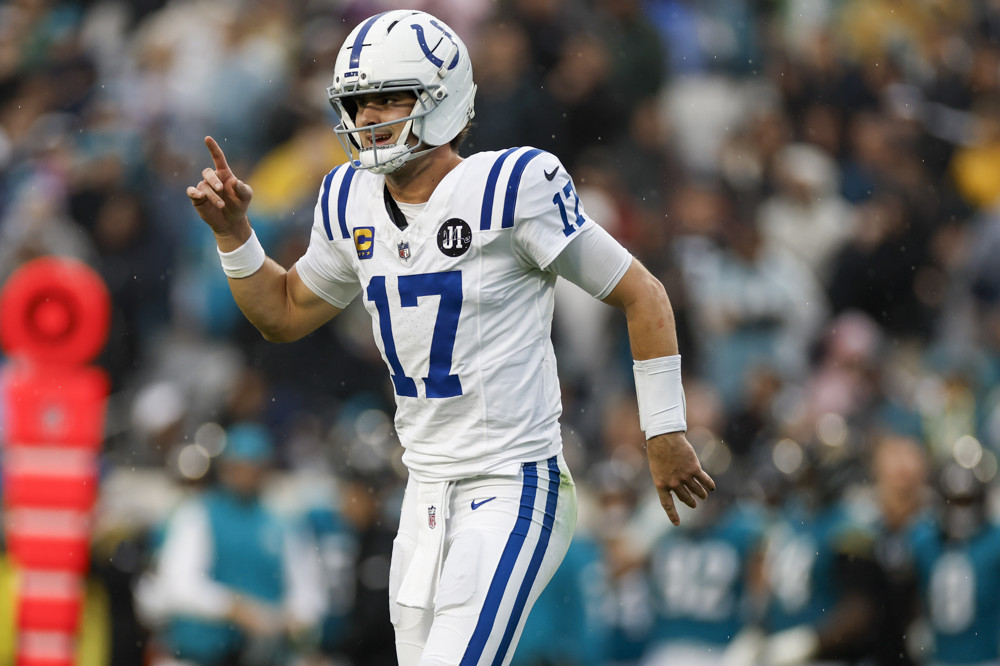
Daniel Jones - Indianapolis Colts
Colts quarterback Daniel Jones suffered a torn Achilles tendon in Week 14, confirmed by Colts head coach Shane Steichen. The injury will keep Jones out for the remainder of the 2025 season following surgery.
Jones’ Achilles injury abruptly halted his best season in years, as he had been playing at a high level prior to the injury. Recovery projections range from six to nine months or more, meaning a return during 2026 training camp is possible but not guaranteed.
Najee Harris - Los Angeles Chargers
Running back Najee Harris suffered a torn Achilles early in the 2025 season, ending his year after just three games with the Chargers. Harbaugh confirmed the diagnosis, and imaging showed a complete rupture.
Why the Achilles Tendon Is So Vulnerable in NFL Players
Achilles injuries across NFL including multiple star players have highlighted just how fragile this tendon can be under elite workloads.
Cleveland Browns quarterback Deshaun Watson, for example, underwent surgery earlier this year for his second tear of the right Achilles tendon, illustrating how difficult it can be to fully escape the long-term consequences of this injury once it occurs.
Medical experts consistently point to a combination of overuse, cumulative load, and explosive force production rather than a single identifiable cause.
Unlike most tendons, the Achilles is under near-constant tension. It is engineered to store and release energy, meaning it is almost always “loaded,” even during basic movements like walking. In professional football players — who generate forces multiple times their body weight while sprinting, cutting, and jumping — the stresses transmitted through the Achilles are among the highest anywhere in the body.
When rupture occurs, it is not a simple tear. The injury often sends a shock through the entire calf complex, temporarily shutting down normal muscle activation and dramatically impairing strength, coordination, and explosiveness. This helps explain why players can be medically cleared yet still struggle to regain pre-injury performance.
The Calf–Achilles Connection
Sports medicine specialists increasingly emphasize that the calf and Achilles must be treated as a single functional unit.
As training programs have focused heavily on hip and upper-leg strength, some believe the lower leg has lagged behind. That imbalance can leave the calf–Achilles complex less able to tolerate extreme loads.
A calf strain does not automatically lead to an Achilles tear, but any unresolved weakness or incomplete recovery increases vulnerability. Many athletes who rupture their Achilles report no warning symptoms, reinforcing how little margin for error exists once tissue tolerance is exceeded.
How Are Achilles Tears Diagnosed?
Achilles ruptures are often diagnosed clinically using a simple but highly reliable maneuver known as the Thompson Test.
During the test:
The patient lies face down with the foot hanging off the table
The examiner squeezes the calf muscle
In a healthy Achilles, the foot automatically points downward
In a ruptured Achilles, there is little or no movement
The absence of plantar flexion makes the diagnosis relatively straightforward in most cases. Imaging such as ultrasound or MRI may be used to confirm the diagnosis or assess the extent of damage, but the clinical exam alone is often sufficient.
Surgery vs Nonsurgical Treatment for Achilles Tears
Once a rupture is confirmed, treatment typically falls into one of two paths: surgical repair or nonsurgical management.
Surgical Repair
For NFL players and high-level athletes, surgery is usually recommended for complete ruptures.
Benefits supported by medical literature include:
Stronger repaired tendon
Lower re-rupture rates
Faster and more predictable return to sport
Better tolerance for explosive activity
Because NFL players require maximal strength, burst, and durability, surgical repair remains the standard of care.
Nonsurgical Treatment
Nonoperative treatment can produce acceptable outcomes in lower-demand patients, though:
Recovery tends to be longer
Re-rupture risk is slightly higher
Return to elite explosive performance is less predictable
In professional football, nonsurgical management is rarely chosen for full tears.
What Does Achilles Rehabilitation Look Like?
Regardless of treatment choice, recovery is long and demanding.
Early recovery typically includes:
Immobilization in a cast or boot
No driving for at least one month (longer for right Achilles injuries)
Gradual progression to weight-bearing
Modern rehab protocols now favor earlier controlled loading, often beginning around the third week after injury. Research suggests this approach reduces excessive scar formation and promotes better tendon healing.
Rehab then progresses through:
Walking boot phase
Gentle stretching and range-of-motion work
Progressive strengthening
Running mechanics
Sport-specific drills
There are no safe shortcuts. Attempts to accelerate timelines increase re-injury risk.
Achilles Tear Recovery Timeline in the NFL
Season-ending injury: Always
Return to football activity: 8–10 months
Return to games: 9–12+ months
Return to peak performance: Often longer than one full season
Even after clearance, players frequently require additional time to rebuild trust and explosiveness.
Do NFL Players Fully Recover From Achilles Tears?
This is the most common and most misunderstood question.
While many players return to the field, full return to pre-injury performance is far from guaranteed, especially in the first season back.
Historical trends show:
Reduced snap counts
Decline in explosive play rate
Loss of first-step quickness
Increased reliance on scheme rather than athleticism
At SIC, players returning from Achilles tears, particularly in Year 1, receive significant downgrades in projected performance. Over time they can fully recover as shown by Aaron Rodgers.
Which Positions Are Most Affected?
Running backs: Steep decline in burst and workload
Wide receivers: Reduced separation and top-end speed
Edge rushers: Loss of first-step explosiveness
Quarterbacks: Decreased mobility and lower-body torque, especially when the injury affects the push-off leg
Why Achilles Tears Matter for Betting and Fantasy Football
Achilles recoveries are consistently mispriced by public markets.
Common mistakes include:
Assuming full recovery by Week 1
Ignoring snap limitations and workload management
Relying on name recognition rather than functional health
SIC Picks incorporates these realities - one reason injury-based modeling continues to outperform conventional analysis.
Bottom Line: Achilles Tears Remain a Major Red Flag
Despite medical advances, Achilles ruptures remain among the most damaging injuries in football.
Key takeaways:
Always season-ending
Long-term performance decline is common
Explosive positions are hardest hit
Recovery takes longer than most expect
Betting and fantasy markets often underestimate impact
Understanding Achilles injuries through a medical and performance lens is essential and it remains one of the most valuable edges in NFL analysis.
For ongoing injury breakdowns, player health scores, and medically informed betting insights, visit SIC
Want more expert injury insights?
Sign up for a free account and newsletter at Sports Injury Central