Patellar tendon tears are one of the most serious knee injuries in the NFL. While far less common than ACL or Achilles ruptures, they can be career-altering, especially for players whose performance depends on power, leverage, and knee extension.
This article explains what a patellar tendon tear is, how it happens, recovery timelines, and notable NFL cases this season—with a focus on medical reality, not just return-to-play dates.
What Is the Patellar Tendon?
The patellar tendon connects the kneecap (patella) to the shin bone (tibia) and is a key part of the knee extensor mechanism. It allows players to:
Straighten the knee
Explode off the line
Absorb force when landing or cutting
A complete tear disrupts this mechanism entirely, making normal movement impossible.
How Do Patellar Tendon Tears Happen in the NFL?
Most patellar tendon ruptures occur during non-contact, high-force movements, such as:
Explosive push-offs
Sudden deceleration
Awkward landings with a bent knee
Common Risk Factors
Prior knee surgery (especially ACL reconstruction)
Chronic patellar tendinitis (“jumper’s knee”)
High body mass combined with explosive demands
The injury is most often seen in offensive and defensive linemen, but can occur at any position.
Partial vs. Complete Tears
Partial tears are rare at the NFL level and may retain limited function.
Complete tears are far more common and cause immediate loss of knee extension.
For NFL players, complete ruptures almost always require surgery.
Diagnosis and Surgery
Diagnosis includes:
Clinical exam (inability to perform a straight-leg raise)
X-ray showing a high-riding patella
MRI to confirm the tear and plan surgery
Surgical Treatment
Primary tendon repair with anchors or sutures
Often reinforced with internal bracing or graft tissue
Early surgery leads to better outcomes.
Patellar Tendon Tear Recovery Time in the NFL
Typical return-to-play timeline: 9–12 months
General Phases
0–6 weeks: Immobilization and early motion
6–16 weeks: Strength and movement restoration
4–6 months: Running and controlled explosiveness
7–9 months: Football-specific drills
9–12 months: Return to games if strength and confidence return
Even after clearance, performance often lags behind early.
Patellar Tendon Tears in the NFL This Season
The 2025–26 NFL season has already seen multiple high-profile patellar tendon injuries—most involving offensive linemen, where knee power is critical.
Rashawn Slater (Chargers): Slater tore his patellar tendon in training camp, ending his season.
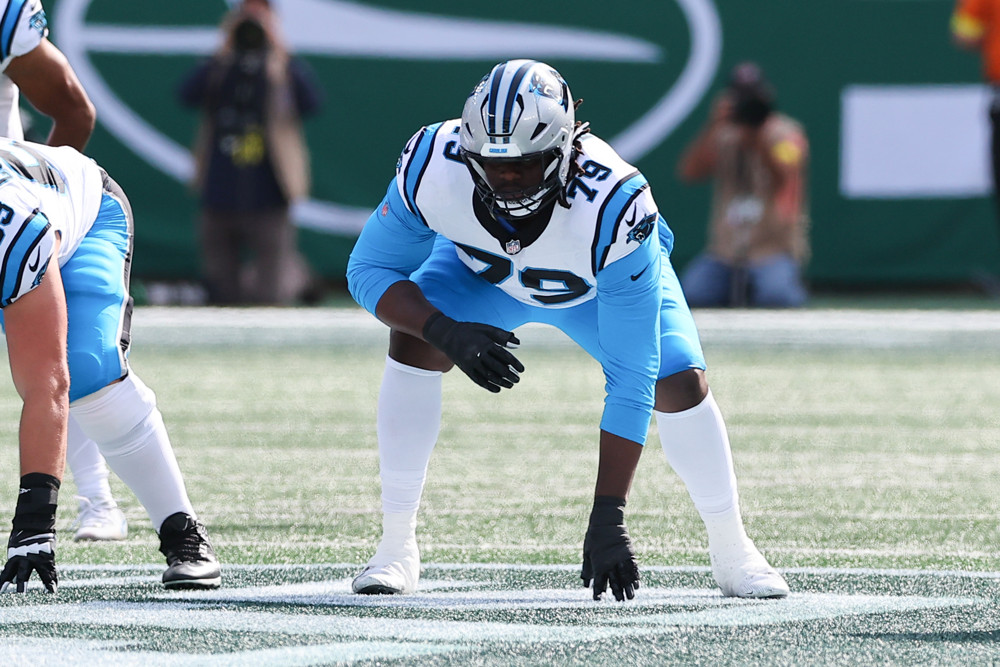
Ikem Ekwonu (Panthers): Ekwonu suffered a torn patellar tendon during the playoffs, requiring surgery.
Ozzy Trapilo (Bears): Trapilo the rookie lineman lost for the postseason after a patellar tendon tear.
Zach Tom (Packers): Tom played through a partial patellar tendon tear that required offseason surgery.
Can NFL Players Fully Recover?
Return to play is possible but return to peak performance is not guaranteed.
Common lingering issues include:
Quadriceps weakness
Reduced explosiveness
Snap count limitations early on
Among major knee injuries, patellar tendon tears carry one of the highest risks of long-term performance decline.
Bottom Line
Patellar tendon tears are one of the toughest injuries to overcome in the NFL. They require surgery, close to a year of rehab, and often impact explosiveness long after return. For teams, bettors, and fantasy players, understanding the true medical recovery timeline - not just activation dates - is critical when evaluating players coming back from this injury.
Want more expert injury insights?
Sign up for a free account and newsletter at Sports Injury Central